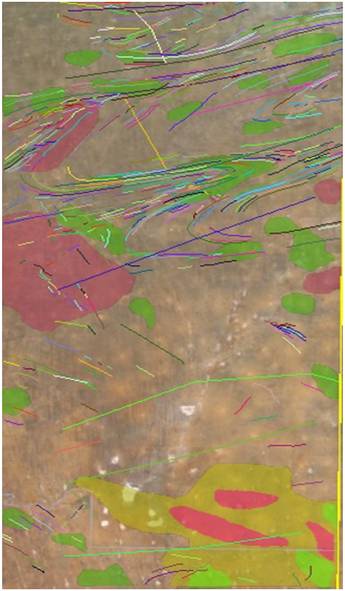
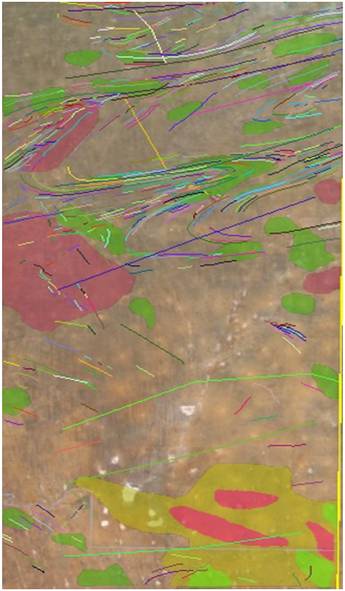
It has long been understood that light gases like hydrogen can seep very slowly from underground deposits, migrating to the surface over time. Once at the surface, their presence influences the local environment, subtly altering surface conditions.
For example, specific bacteria can thrive by feeding on these gases. While these effects are not noticeable in the visible light spectrum, they can be detected through certain electromagnetic radiation frequency filters. Using finely tuned satellite imaging cameras to search for these electromagnetic radiation anomalies has become a key method in hydrogen exploration.
Electromagnetic radiation anomalies indicate the long-term seepage of hydrogen from underground deposits. These anomalies reveal the end points of seepage routes, which can be directly above hydrogen deposits in geologically simple areas, or in more complex regions, they can be up to 100 km away from the source, where transverse seepage has occurred.
Remote sensing provides a valuable indication of the existence of hydrogen deposits. To determine the source of these deposits, geochemical soil samples must be analyzed. Understanding the geological composition of the study area is crucial to accurately locate hydrogen deposits.